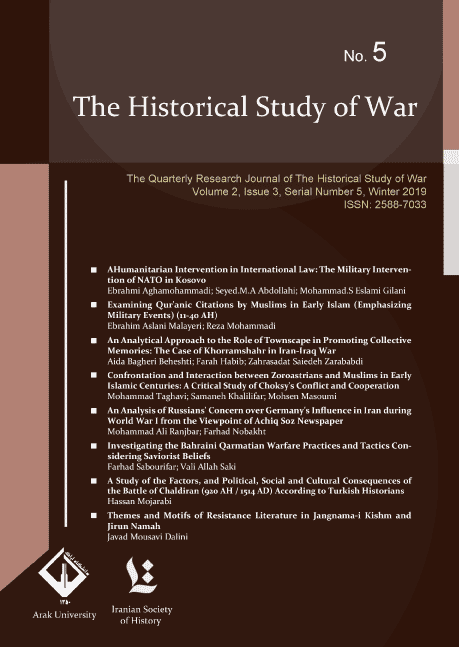
The evolution of the power of the Safavids was largely ingrained in Anatolia's geography. Concurrent with the Safavids' first activities for gaining power, the majoriy of their efforts focused on the Anatolian border region, where, on the other hand, the Ottomans, from the middle of the Bayezid II period, were struggling hard to dominate. Therefore, with the serious attempt of the Safavids to gain more power since the time of King Isma'il and a special consideration for Anatolia, it was natural that the Ottomans strived to confront the Safavids and their avarice to regin these areas, resulting in the efforts during Selim I, which led to the Battle of Chaldiran (920 AH / 1514 AD). Accordingly, the main question of this paper is what were the political, social, and cultural, factors and consequences of the Battle of Chaldiran between Iran and the Ottoman from the perspective of the Ottoman Turkic historians and scholars? The research findings indicate that the expansionism of Shah Isma'il in Diyarbakir resorting to theocracy (Shi'ism) led Sultan Salim to plan the Battle of Chaldiran on the western Iranian border to preserve his own monarchy by having recourse to Ottoman Sheikh al-Islam and a strong religious base. His success would bring him domination over the world trade's thorougfare from the East to the West, but he failed to acheive his main goals.
کیدو، اکرم (1395ش). نهاد شیخالاسلام در دولت عثمانی، ترجمه سید محمدرضی مصطفوی نیا و حسن حضرتی، تهران: ندای تاریخ.
مطراقچی، نصوح (1379ش). بیان منازل (سفر عراقین)، ترجمه، رحیم رئیس نیا، تهران: سازمان میراث فرهنگی.
میراحمدی، مریم (1371). تاریخ سیاسی اجتماعی ایران در عصر صفوی، تهران: امیرکبیر.
نوایی، عبدالحسین (1386). روابط سیاسی واقتصادی ایران در دوره صفویه، تهران: سمت.
Akgunduz, Ahmat (1991). Osmanli Kanunnameleri Ve Hukuki Tahlilari, III, Istanbul.
Âli, Gelibolulu Mustafa (1997). Kitabü’t-tarih-i künhü’l-ahbar (Kayseri Raşid Efendi Kütüphanesindeki 901 ve 920 No. lu nüshalara gore), haz. Ahmet Uğur ve öte.Kayseri, Erciyes Üniversitesi.
Pashazade, Ashik (1914). Ashik pashazade Tarihi (al-osmon tarihi), Istanbul.
Boyonagaga, Yilmaz (1977).Türk Islam Sentezi, Istanbul.
Birdoğan, Nejat (1990). Anadolunun Gizli Tarihi, Alevilik, Hamburg.
Bitlisi, Serefhan (1976). seref name, moskova.
Celal, zade, Mustafa (1990). Selim Name, Kültür Bakanlığı Yayınları, 1000 temel Eser, Ankara.
Çelebi, Mehmet Hemdemi (1989). Solak zade Tarihi Haz. Vahıd Çubuk, Kültür bakanlığı Yayınları, Sevinc Matbaası, Ankara.
Farzalibeyli, Sahin (2002). Resmi Belgelerde 23 Agustus caldiran Savasininnedenleri ve Sonuclari, XIII, Turk Tarih kongerasi4-8 ekim1999, Ankara.
Garcia, Jose Manuel (2002). The Persian Gulf: in the 16th-17th centuries, Tehran, House of the Foreign Ministry.
Gündüz, tufan (editör) (2012). Osmanli Tarİhi El Kitabı, Grafıker Yayınları, Ankara 2012.
Hami, Ismail (1971). osmanli tarihi kronolijisi, Istanbul.
Hamer, Joseph von (1329). Dvleti osmaniyeTarihi, cIII, Istanbul.
İbn Kemal, Ahmed Şemseddin Kemalpaşazade, Tevarih-i al-i Osman: VIII. Defter
Karaca, Behset (2002). “Safavi Devleti'nin Ortaya Çıkışı ve II. Bayezid Dönemi Osmanlı Safevi İlişkileri, Türkler, Yeni Türkiye yayınları, cilt 9, Ankara.
Kılıç, Ramzi, (2001). Osmanlı-İran Siyasi Anlaşmalari, İstanbul,2001.
Kırzıoğlu,Fahrettın (1993). Osmanlıların Kafkas Ellerini Fethi1 1453-1590(Ankara, 1993.
Kitapçi, Zekeriyai, Türk Dünyasi Araşirmalari, No 40
Küçükdağ, Yusuf (1999). Osmanlı Devletının Şah İsmaile Karşi Aldığı Önlemler, Osmanlı. C, I. Ankara.
Müneccimbaşı Ahmet Dede (1974). Müneccimbaşı Tarihi, C.2, çev: İsmail Erunsal, İstanbul.
Peçevi, İbrahim (1980). Tarih,F.Derin ve V.Çabuk,Haz.İstanbul.
Tekin dağ,Şehabeddin, (1968). ŞahKulu Baba Tekli İsyanı. Belgelerle Türk Tarih Dergisi.
Tansel, Selahattin (1967). “Yeni Kaynak ve Vesîkaların Işığı Altında Yavuz SultanSelim’in Îran Seferi”, Tarih Dergisi.
Tansel, Selahattin (1969). Yavuz Sultan Selim, Millı Gitim Basimevi, Ankara.
Uzunçarşılı, Ismail Hakkı (1988). İsmail Hakkı Osmanlı Tarihi, kuruluştan İstanbul’un fethine kadar, Türk Tarih Kurumu, Ankara.
Velidi, Toğan (1970). A.Z, Umumi Türk Tarihine ğiriş, Istanbul.
mojarabi,H. (2018). A Study of the Factors, and Political, Social and Cultural Consequences of the Battle of Chaldiran (920 AH / 1514 AD) According to Turkish Historians. Historical Study of War, 2(3), 115-148.
MLA
mojarabi,H. . "A Study of the Factors, and Political, Social and Cultural Consequences of the Battle of Chaldiran (920 AH / 1514 AD) According to Turkish Historians", Historical Study of War, 2, 3, 2018, 115-148.
HARVARD
mojarabi H. (2018). 'A Study of the Factors, and Political, Social and Cultural Consequences of the Battle of Chaldiran (920 AH / 1514 AD) According to Turkish Historians', Historical Study of War, 2(3), pp. 115-148.
CHICAGO
H. mojarabi, "A Study of the Factors, and Political, Social and Cultural Consequences of the Battle of Chaldiran (920 AH / 1514 AD) According to Turkish Historians," Historical Study of War, 2 3 (2018): 115-148,
VANCOUVER
mojarabi H. A Study of the Factors, and Political, Social and Cultural Consequences of the Battle of Chaldiran (920 AH / 1514 AD) According to Turkish Historians. Historical Study of War, 2018; 2(3): 115-148.